LOOSE
Leveraging time perception for healthy gaming
Nottingham Trent University
Product Designer
2025
Nottingham, UK
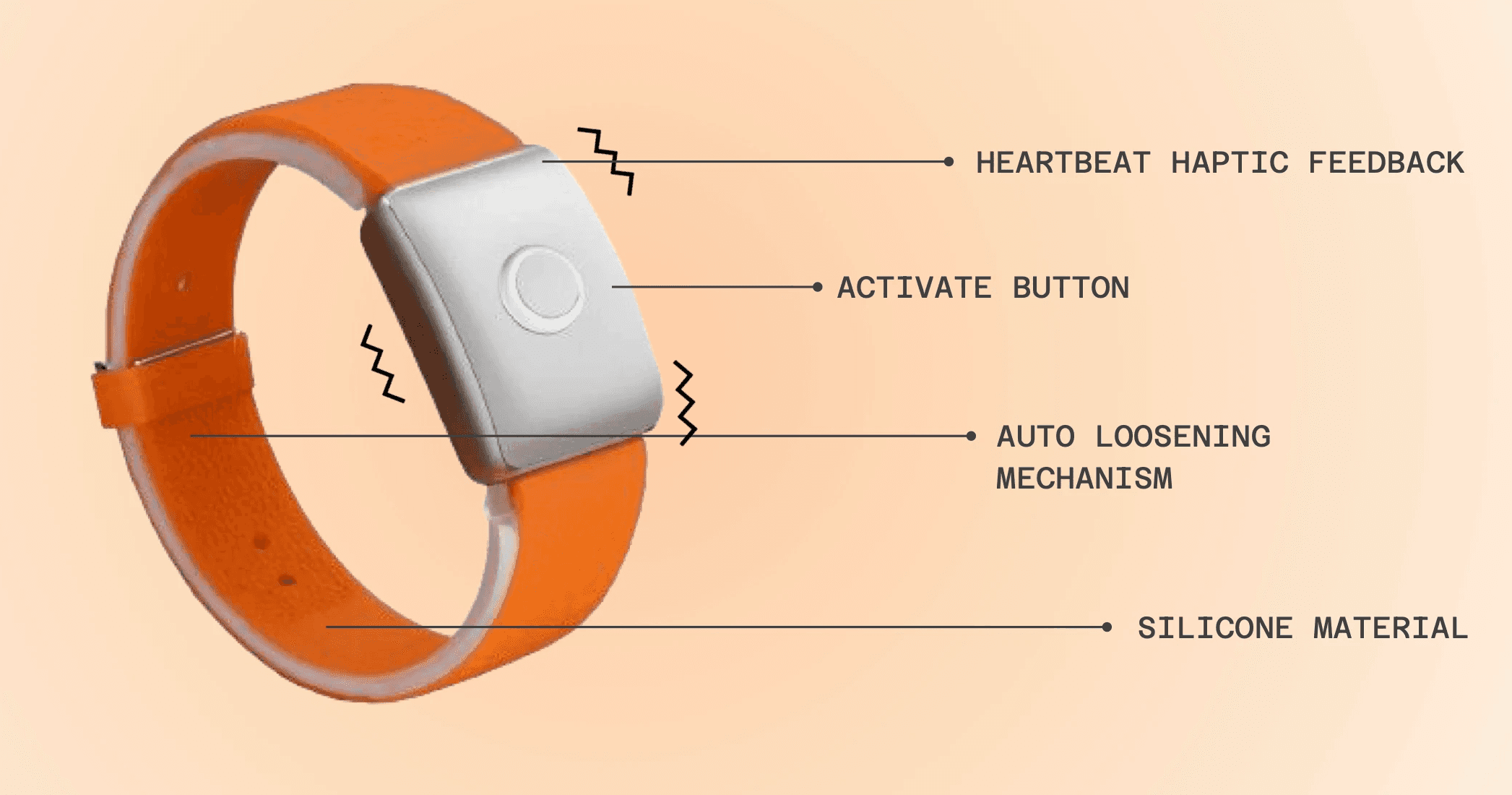
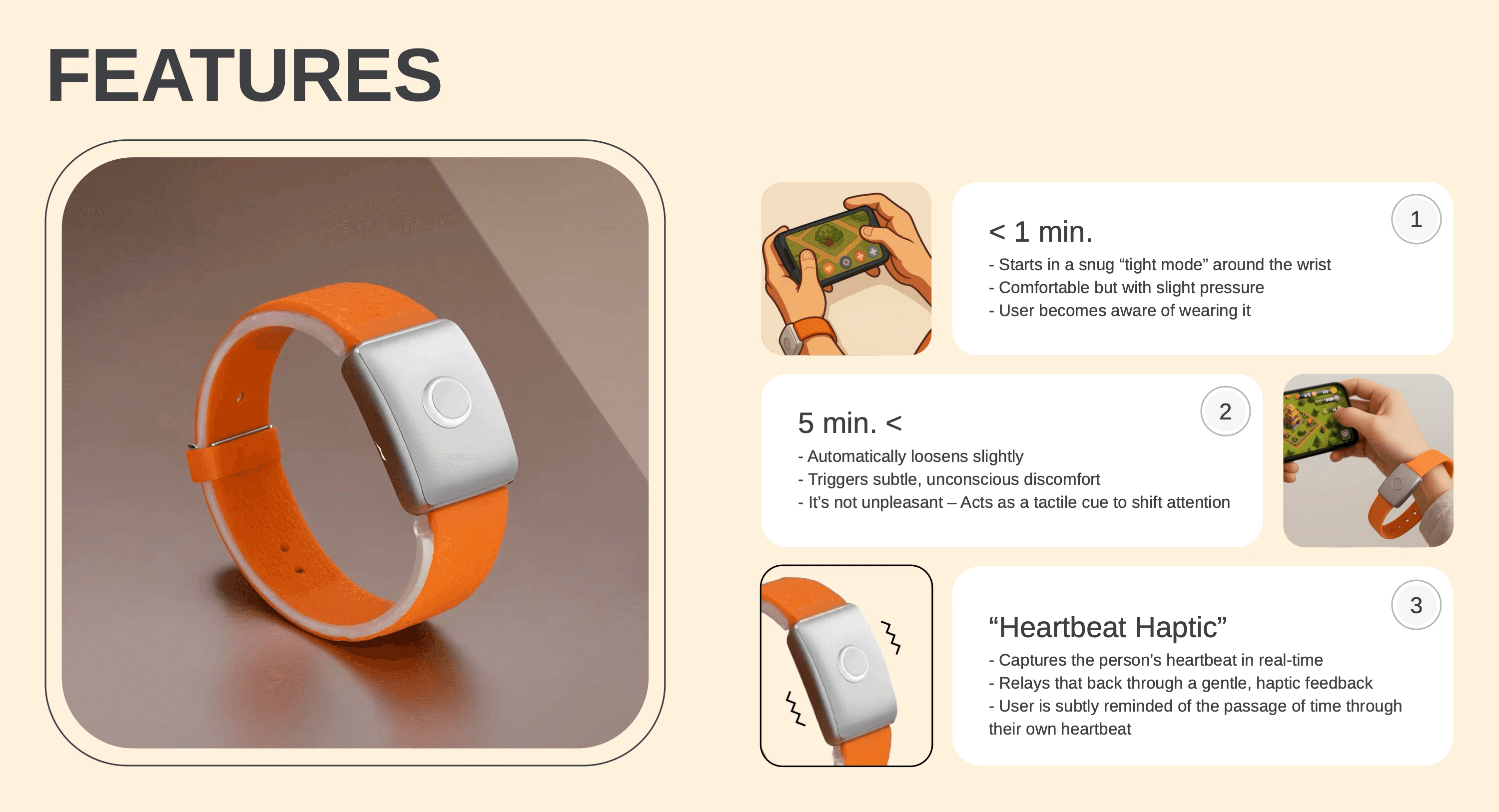
Time perception while gaming is a problem for teenagers with ADHD, often lacking solutions with empirical evidence. By performing a Design Sprint 2.0, a wearable prototype was built to increase time awareness through subtle, haptic cues.
Children – particularly teens with ADHD – frequently lose track of time while gaming, at a cost to sleep, schoolwork, and social time. ADHD specifically affects time perception and impulse regulation, making this group both highest-risk and most instructive to design for.
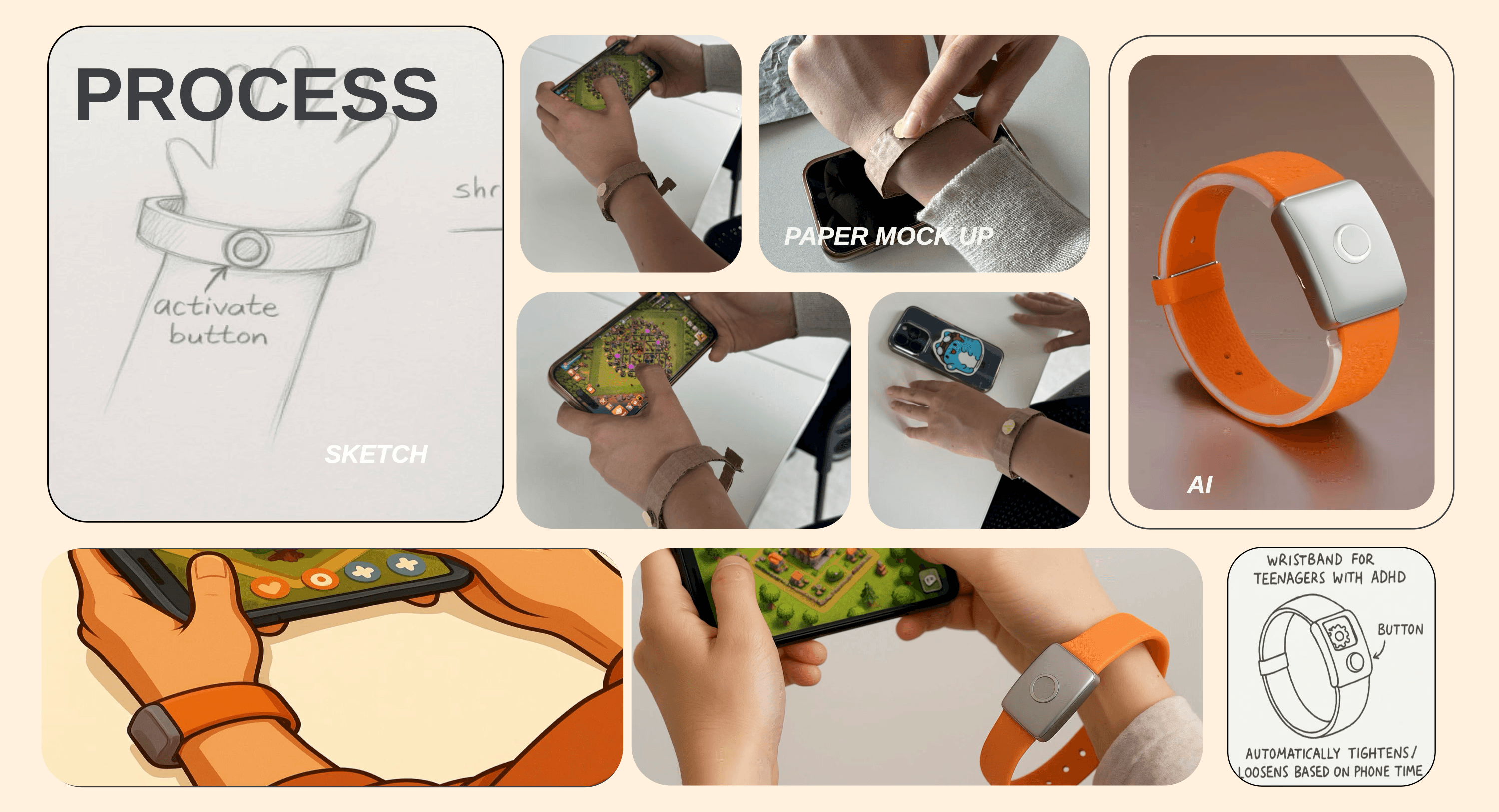
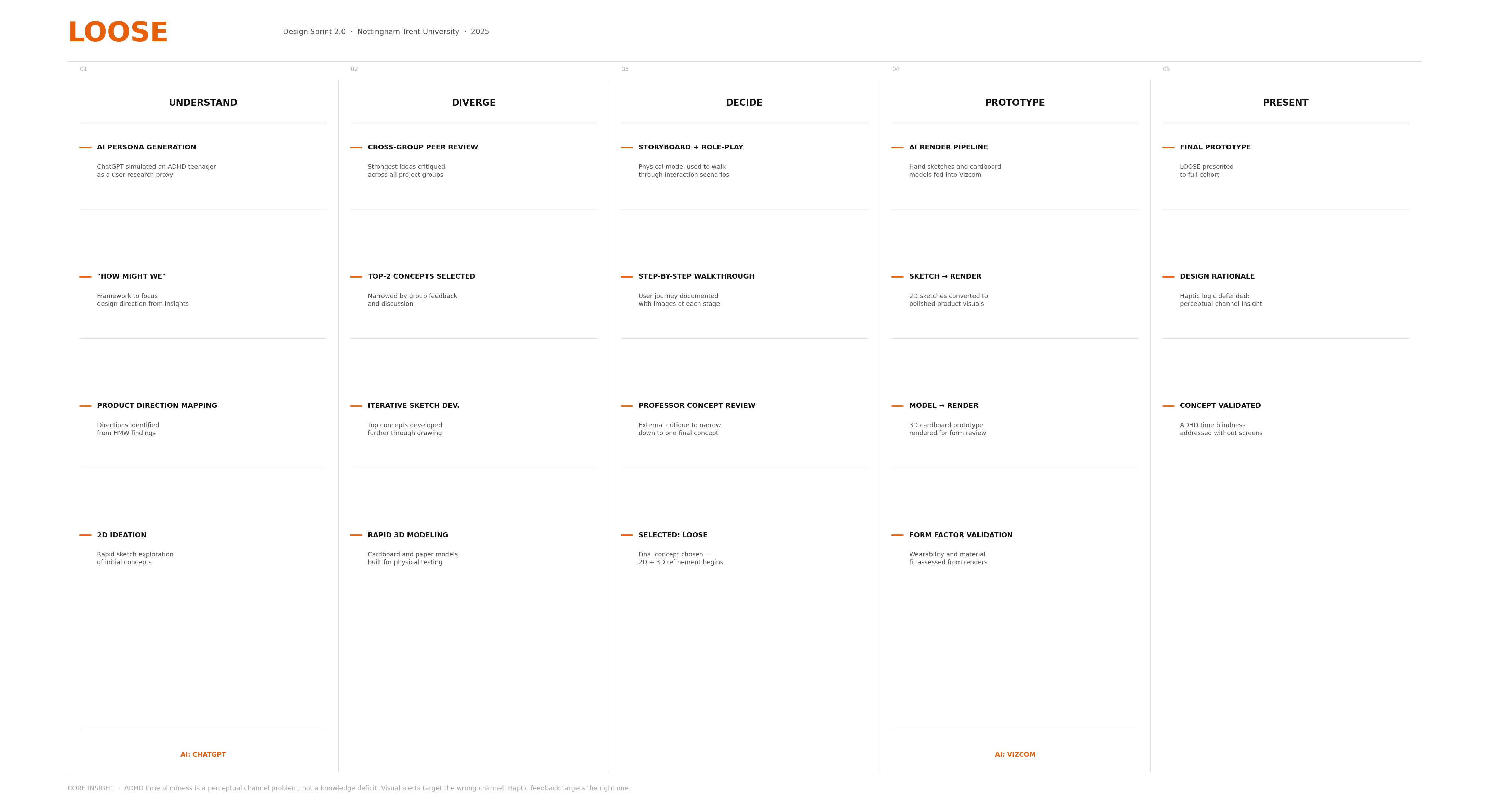
A 10-day sprint at Nottingham Trent University combining direct instruction from NTU psychology faculty – covering game addiction, flow/immersion theory, and time perception – with persona-based problem framing, ideation, and prototyping. I led design direction throughout and built the prototype independently in Vizcom.
Visual and audio notifications get filtered out during gaming because attention is already saturated by the game's own visual and audio channels
– but a tactile cue interrupts through a separate sensory channel entirely, making it far harder to tune out. That realization, drawn from my own experience as a gamer, became the core design direction.
Early concepts also leaned towards a non-wearable form factor, shaped by console-era assumptions — but actual teen gaming behavior has shifted heavily to mobile, supporting the idea of a wearable solving for the right context.
Presented the prototype and design rationale to NTU Design Summer School faculty, covering target group, mechanism, and product rationale. Our team received the highest support, and the prototype is currently being considered as an intervention for a design research paper.
With more time during the sprint, I'd validate form factor directly with teen users before committing to a wearable – a "tacky watch" may not be something teens would actually wear – and prototype the tactile cue itself (intensity, timing, pattern) rather than relying on the concept alone.